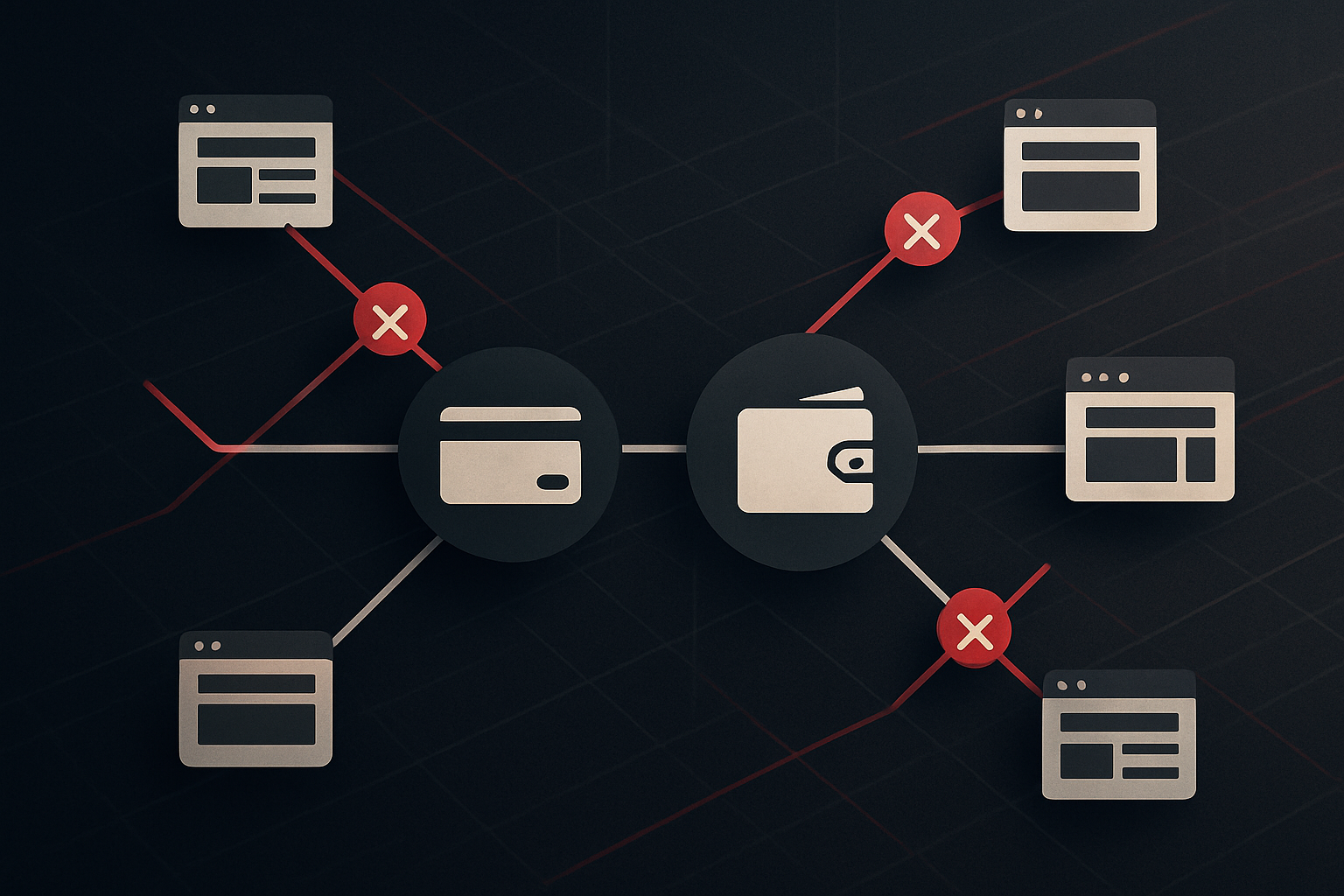
The World Intellectual Property Organisation has launched a new enforcement mechanism that shifts copyright policing away from traditional takedown channels and into the financial infrastructure layer. Called Alert Pay, the system allows rightsholders to flag allegedly infringing sites directly to payment processors like PayPal, Mastercard, and others, who then decide whether to suspend merchant accounts or block transactions. Early pilot results show a 71% removal rate—faster and broader than conventional legal action.
For hosting providers and infrastructure operators, Alert Pay represents a significant change in how content enforcement cascades through the internet stack. Rather than targeting domain registrars or hosting providers with DMCA notices, copyright holders can now attack the payment layer, effectively making it economically unviable for a site to operate regardless of where it's hosted or who registers its domain.
The Payment Processor as Enforcer
Payment providers have long been willing partners in copyright enforcement—they already suspend accounts for IP violation claims, and their terms of service grant them broad discretion to refuse service. What Alert Pay does is systematise this process. Rather than waiting for individual complaints or legal requests, rightsholders submit flagged URLs and associated merchant details to WIPO's database, which payment networks then query or receive alerts from.
This approach bypasses several traditional friction points. The site operator doesn't need to be in a specific jurisdiction. The hosting provider doesn't need to receive a formal notice. The domain registrar isn't involved at all. Payment networks, operating under their own policies rather than government mandate, can act unilaterally. From a copyright enforcer's perspective, this is elegant: the site remains online and technically accessible, but it cannot receive funds.
The 71% removal rate from the pilot likely reflects a combination of factors: merchants who don't contest claims, payment providers applying conservative policies to avoid liability, and sites that simply shut down once cash flow stops. It's notably higher than typical DMCA takedown success rates, which often measure domain removal rather than actual site death.
Jurisdictional and Technical Implications
For operators of offshore hosting infrastructure, Alert Pay introduces a new vector of pressure independent of where servers physically sit. A site hosted in a jurisdiction that ignores DMCA notices or lacks copyright enforcement still depends on payment rails to operate—and those rails are ultimately controlled by multinational financial firms answerable to US regulatory pressure and their own risk management policies.
This is a form of extraterritorial enforcement through the financial system. Payment processors, many headquartered in the US or EU, effectively become the enforcement arm for copyright claims regardless of the site's legal status in its own jurisdiction. A privacy-focused hosting provider or one operating under a lenient content policy can still find its customer's ability to monetise cut off by a payment suspension.
There's also a scaling question. Payment processors handle millions of transactions daily. Integrating WIPO's alert system at scale requires coordination on data formats, verification procedures, and appeals processes. Early pilots are manageable; maintaining accuracy and fairness as the system grows to cover thousands of flagged sites introduces new operational and liability risks.
The Broader Pattern of Payment-Layer Control
Alert Pay is part of a larger trend in which financial infrastructure becomes a primary enforcement mechanism for policy goals—copyright, sanctions compliance, AML/KYC, acceptable use policies. Payment processors are increasingly the chokepoint through which online activity is policed, because they're easier to regulate and incentivise than distributed hosting or domain infrastructure.
For hosters and privacy-oriented infrastructure operators, this pattern has several consequences. First, it creates pressure to diversify payment methods: sites that rely entirely on major processors become vulnerable to coordinated enforcement. Second, it incentivises payment methods that are harder to block—cryptocurrency, for instance, which cannot be suspended by a single processor. Third, it raises questions about due process: are merchants given fair notice and opportunity to dispute claims before suspension.
The WIPO system is designed to operate at scale and speed, trading some friction for enforcement effectiveness. But that efficiency depends on payment networks trusting the data they receive and acting without lengthy investigation. When enforcement is decentralised across multiple processors, error correction becomes harder.
What Operators Should Understand
If you run hosting infrastructure or accept customers in grey areas of content policy, Alert Pay signals that payment suspension is now a direct enforcement tool, not a secondary consequence of hosting action. Sites flagged to payment networks can expect account termination regardless of their hosting provider's stance on the underlying content claim.
This doesn't necessarily mean operators should change policy. Rather, it's worth understanding that the enforcement landscape has shifted downstream, toward the financial layer. Payment processor terms of service are now as important as hosting AUPs in determining which sites can operate sustainably. For operators offering privacy, freedom of speech, or DMCA-ignored services, building payment resilience—accepting multiple processors, exploring alternative payment rails, maintaining transparent appeal processes—is becoming operational necessity.