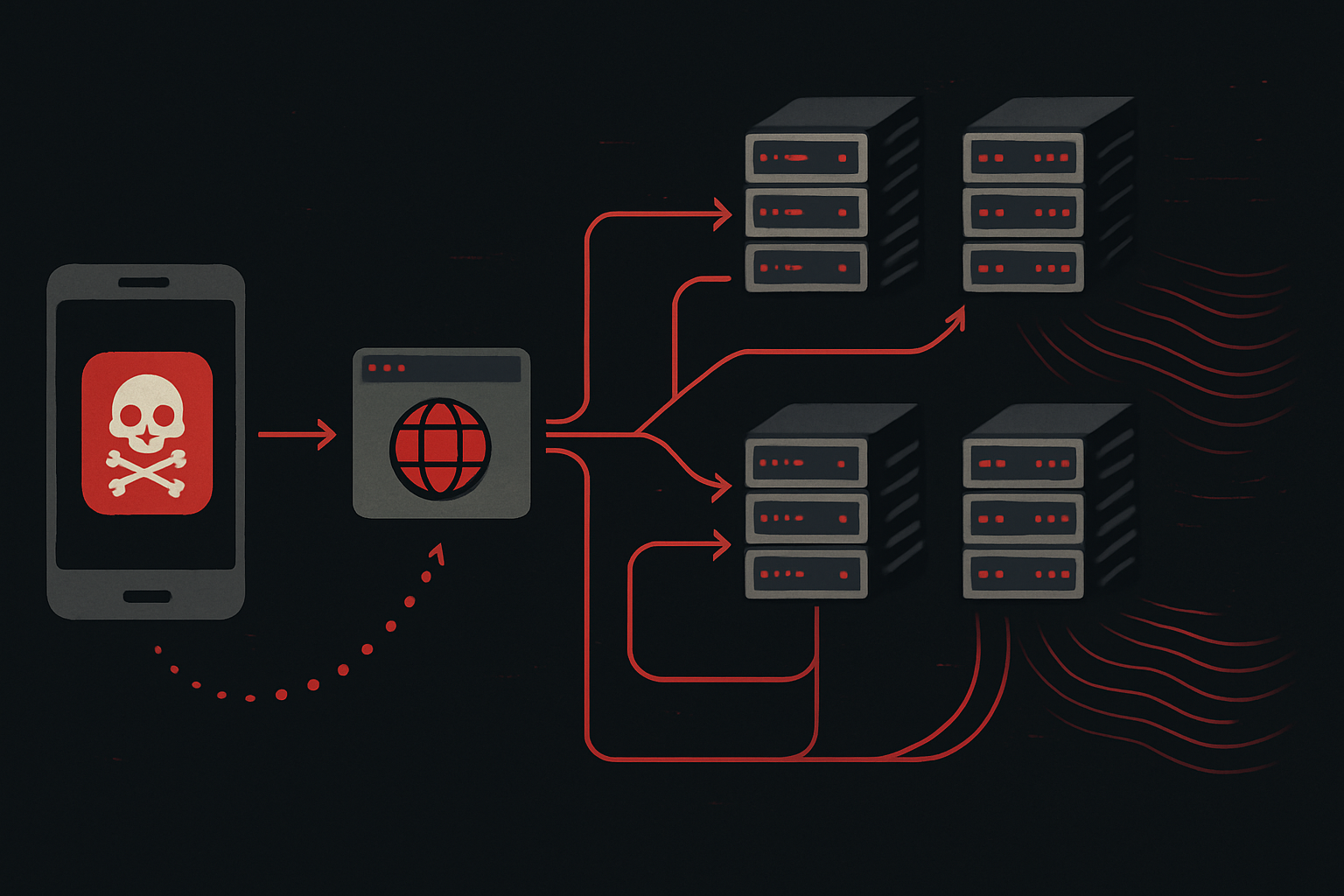
A sophisticated ad fraud operation called Trapdoor recently reached a scale that demands closer examination from the infrastructure side. Using 455 malicious Android applications and a network of 183 command-and-control domains, the scheme generated 659 million fraudulent ad bid requests per day. For hosting operators and infrastructure engineers, the technical architecture behind such operations offers insight into how abuse unfolds across the ecosystem.
The Multi-Stage Fraud Pipeline
What distinguishes Trapdoor from smaller ad fraud campaigns is its deliberate, multi-stage design. Rather than a single monolithic operation, researchers at Satori Threat Intelligence identified distinct phases: app distribution, C2 communication, payload delivery, and fraud execution. The 183 C2 domains functioned as the nervous system—receiving instructions from command servers, distributing updated malicious code, and coordinating bid requests across the botnet.
This separation of concerns is worth noting. By fragmenting infrastructure, the threat actors created redundancy. If one batch of C2 domains fell under investigation or was taken down, others remained operational. The scale—183 separate domains—suggests deliberate domain sprawl as a defensive measure rather than organic growth.
Hosting and Registration as an Enabler
The operation's longevity and reach depended directly on the underlying hosting and domain infrastructure. Fraudsters must register domains, host C2 servers, and maintain sufficient bandwidth and uptime to coordinate hundreds of millions of daily requests. The fact that 183 domains remained active suggests either that registrars and hosters were slow to respond to abuse reports, or that the actors deliberately used providers with weaker abuse enforcement.
From an operator's perspective, this highlights a persistent tension: rapid abuse detection requires automation, manual review, and coordination with threat intelligence feeds. A hosting provider relying solely on reactive abuse reports will miss infrastructure like Trapdoor's until the operation reaches critical mass. The 659 million daily requests represent not just fraud impact but a measurable signal of server resource consumption—traffic anomalies that network monitoring should have flagged.
The Android App Distribution Problem
The 455 applications themselves were the visible surface of the fraud. Users downloaded seemingly legitimate apps from app stores or third-party sources, unaware that the application contained code triggering malicious ad requests in the background. Once installed, the app established contact with C2 infrastructure to receive updated commands and fraud parameters.
This attack surface extends beyond the hosting infrastructure. App store review processes, device-level permissions, and user awareness all play roles. But from a hosting and infrastructure angle, the critical observation is that C2 domains must remain accessible and responsive. Any network latency, downtime, or connectivity issue between the compromised device and the C2 server breaks the fraud chain. This is why the threat actors invested in 183 separate domains—geographic distribution and redundancy matter to their operational continuity.
Detection, Mitigation, and the Infrastructure Response
Identifying Trapdoor's infrastructure required correlation of malware samples, network traffic patterns, and domain registration data. Law enforcement and hosting providers working together can accelerate takedowns, but the reactive nature of abuse handling means such operations often operate for months before discovery.
Operators running legitimate infrastructure can reduce the likelihood of harboring such C2 networks through network monitoring, DNS anomaly detection, and abuse team responsiveness. Patterns of sudden domain registration spikes, regional IP blocks commonly associated with bulletproof hosting, and unusual traffic volumes should trigger investigation. The 659 million daily requests would have produced observable network signatures—sustained, high-volume, often repetitive traffic patterns inconsistent with legitimate user behaviour.
The Trapdoor case is ultimately a reminder that hosting infrastructure is not neutral ground. The scale of modern fraud depends directly on the availability of domain registration, C2 hosting, and bandwidth. While no provider can prevent all abuse, those with robust monitoring and enforcement reduce the operational lifespan and effective reach of such schemes.