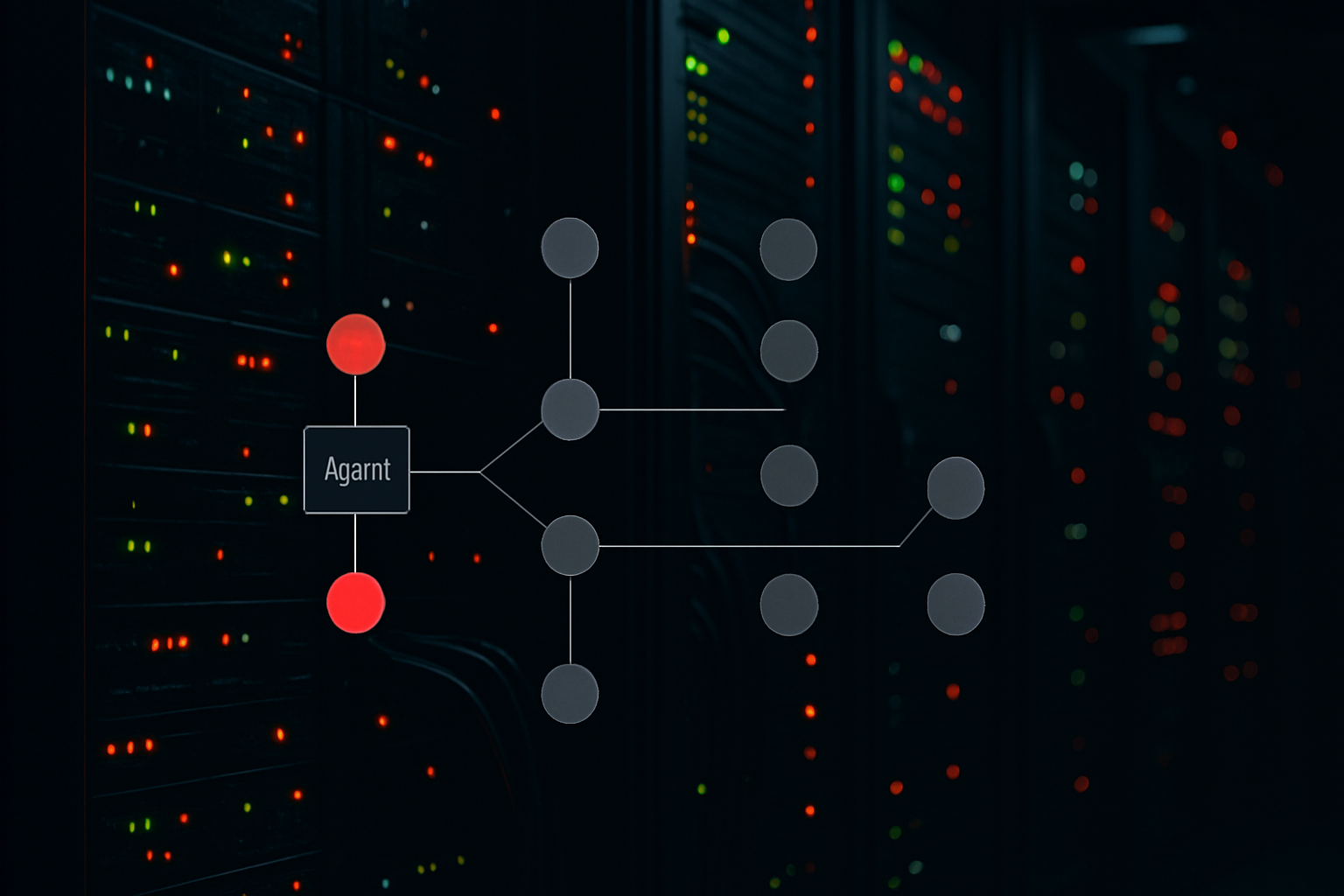
The proliferation of AI-powered third-party tools has quietly introduced a substantial security blind spot into many organisations' infrastructure. Unlike conventional applications that authenticate through single sign-on or centralised identity providers, a vast majority of embedded AI agents operate entirely outside these governance frameworks — not by design, but because identity systems can only monitor what attempts to authenticate through them.
The Scale of the Invisibility Problem
Research from the 2026 State of Agent Security Report reveals the scope of this gap. Approximately 1,280 third-party products now embed AI capabilities. Of these, only around 282 sit behind single sign-on infrastructure. The remaining thousand operate as what might be termed "identity dark matter" — software that your organisation uses but your identity stack cannot see, control, or audit.
This is not a configuration oversight. The agents in question often do not authenticate at all. They may authenticate to their parent application directly, operate via API keys, or simply run within already-authenticated contexts. From the perspective of a traditional identity management system, they do not exist.
For infrastructure teams and hosting providers managing multi-tenant environments or customer workloads, this creates a genuine operational problem. You cannot govern what you cannot see. You cannot audit what you do not track. You cannot revoke access to something your identity layer does not know is making requests.
Where the Risk Materialises
The practical implications cut across several critical areas. Third-party agents embedded in widely-used products often handle sensitive data — customer records, API credentials, internal documentation, configuration files. If those agents operate without visibility into your identity infrastructure, several failure modes become possible.
An employee's access might be revoked centrally, but an AI agent still running in their context or API keys they generated may continue operating. Lateral movement within your infrastructure becomes harder to detect when agents communicate via channels that bypass standard authentication logs. Compliance audits become incomplete when you cannot produce a full audit trail of all software agents accessing your systems.
The challenge is particularly acute in managed hosting environments where customer workloads run on shared infrastructure. A customer may inadvertently deploy third-party software with embedded agents that your security monitoring cannot see. Those agents might perform actions that appear to originate from legitimate customer processes but are actually autonomous third-party behaviour.
Structural Limitations of Traditional Identity Stacks
Current identity and access management systems were built for a different era. They assume a clear perimeter: users authenticate, receive tokens, and perform actions. The identity layer enforces policy at the boundary. Everything inside that boundary is assumed trustworthy.
AI agents break this model. They exist within already-authenticated contexts, operate with inherited permissions, and often do not require explicit authentication events. They are not replacing users; they are augmenting them. But because they do not touch the identity layer, they remain invisible to it.
Building better visibility requires infrastructure changes that many organisations have not yet implemented. Some possibilities include:
- Mandatory agent registration and attestation — requiring software vendors to declare embedded agents upfront.
- Enhanced telemetry at the application and API level, not just at authentication boundaries.
- Agent-specific capability constraints — sandbox policies that limit what any third-party agent can do, regardless of the user context it operates in.
- Cryptographic binding of agent actions to audit trails, ensuring actions can be traced back to their originating agent rather than appearing as generic user activity.
Not all of these are straightforward to implement, especially in heterogeneous environments where you do not control all the software running on your infrastructure.
Practical Steps for Hosting and Infrastructure Teams
If you operate hosting infrastructure or manage customer workloads, this problem deserves attention now. Begin with inventory: audit your third-party software and explicitly identify which products embed AI or autonomous agents. Check vendor documentation; vendors increasingly disclose this information.
For each agent-bearing product, document its authentication model. Does it use your organisation's identity stack, or does it authenticate independently. What data does it access. What actions can it perform. Can you revoke its access independently of the user who installed it.
Implement network-level monitoring that can detect and classify agent activity. This is not straightforward — it requires deep packet inspection and behavioural analysis — but it provides visibility where identity infrastructure cannot. Consider restricting third-party agent deployment in security-sensitive environments until you have better controls.
Finally, engage with your vendors. Ask them explicitly how their embedded agents authenticate, what they access, and what audit trails they produce. If they cannot answer these questions clearly, that itself is a signal that your visibility and control are insufficient.
The broader research on this topic highlights that this gap will only widen as more software embeds autonomous capabilities. Traditional identity and access management remains necessary but increasingly insufficient on its own. The infrastructure teams that build comprehensive visibility across both authenticated and non-authenticated agent activity will be the ones that maintain genuine security posture as AI becomes more deeply embedded in operational tools.