On 15 July 2026, F5 released patches for a critical vulnerability in NGINX that allows unauthenticated remote attackers to trigger a heap buffer overflow in worker processes. The flaw, tracked as CVE-2026-42533, affects NGINX versions prior to 1.30.4 (stable), 1.31.3 (mainline), and NGINX Plus 37.0.3.1. Any unpatched deployment handling HTTP traffic is at immediate risk.
The Vulnerability Mechanics
Heap buffer overflows in HTTP server code are particularly dangerous because the memory corruption occurs within the worker process that directly handles client requests. An attacker sending specially crafted HTTP requests can trigger the overflow without authentication, meaning the threat surface includes any NGINX instance exposed to the internet — or even trusted networks, depending on input sources.
The immediate impact is denial of service: a successful exploit crashes or forces a restart of the affected worker process, taking connections offline. Heap corruption, however, can also be leveraged for privilege escalation or arbitrary code execution if an attacker understands the heap layout and structures in memory. Remote code execution on a web server process is a full system compromise scenario.
The fact that this requires only an HTTP request means the attack can be automated and scripted. Botnets or vulnerability scanners can probe for unpatched NGINX instances at scale, either for immediate DoS or to prepare them for later exploitation.
Immediate Action: Patch Your Systems
If you operate NGINX, you must update immediately. Check your current version with nginx -v and compare against the fixed versions. Stable users should upgrade to 1.30.4 or later; mainline users need 1.31.3 or later. NGINX Plus subscribers should update to 37.0.3.1 or higher.
Most Linux distributions maintain NGINX in their package repositories, but not always at the absolute latest patch level. If your distro's package repository hasn't yet shipped the patched version, compile from source or add the official NGINX repository to your package manager. Delaying here is risk you cannot afford.
Update procedures vary by infrastructure. In containerized deployments, rebuild your base images with the patched NGINX version, then roll out new pods or containers. For traditional VPS or bare-metal setups, stopping the service, updating, and restarting is straightforward. Zero-downtime reload with nginx -s reload will work after the binary is replaced.
Why Heap Overflows Remain Dangerous
Buffer overflows are a well-understood class of vulnerability — the first published exploit was in 1988 — yet they persist in widely-used software. Modern memory safety tools (AddressSanitizer, Valgrind, fuzzing) exist, and NGINX maintainers are competent engineers. What often happens is that a particular code path, input combination, or state machine interaction slips through testing and review until it reaches production.
This vulnerability likely evaded notice for months or years. Responsible disclosure timelines suggest this was reported privately to F5, fixed in development, and only now released to the public. That delay is intentional: it prevents attackers from exploiting unpatched systems during the window between public disclosure and patch availability. However, once the fix is public, attackers reverse-engineer the patches to understand the flaw and begin scanning for targets.
The timeline for exploitation is measured in hours or days. If your NGINX instances remain unpatched beyond a week after this advisory, assume they will be found and targeted.
Monitoring and Defence in Depth
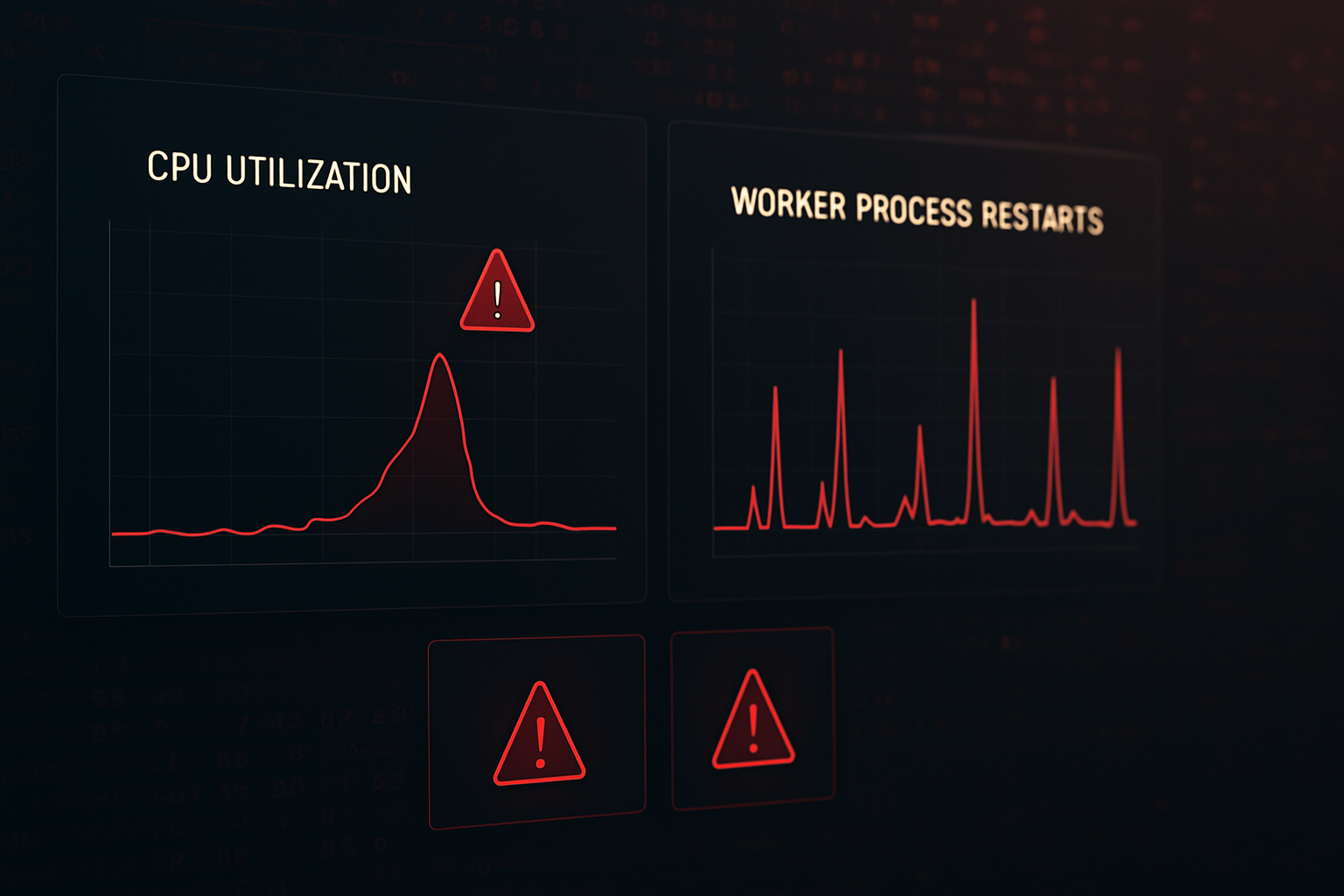
While patching is essential, assume some unpatched systems will exist temporarily (test environments, legacy configurations, networks with slow update cycles). Network-level monitoring for crash patterns or abnormal worker restarts can signal an attack. WAF rules filtering malformed HTTP requests may offer some protection, though a carefully crafted payload might evade detection.
Segmentation is critical: NGINX should run with the minimum privileges necessary, in containers or separate user accounts with restricted capabilities. If a heap overflow does execute code, running as an unprivileged user limits the damage. Principle of least privilege, air-gapping sensitive databases from web tiers, and robust log collection and alerting are standard defences that matter here.
Review your patch management process. If you discovered this advisory more than a few days after it was published, your monitoring and notification pipeline needs improvement. Subscribe to official NGINX and F5 security lists, monitor CVE feeds, and establish a runbook for critical web server vulnerabilities.
This is not a theoretical risk. Patch now.