The U.S. Cybersecurity and Infrastructure Security Agency warned last week of active exploitation targeting CVE-2025-67038, a critical code injection vulnerability in Lantronix EDS5000 Series devices. With a CVSS score of 9.8 and federal agencies facing a June 26 remediation deadline, this incident underscores a broader problem in infrastructure security: out-of-band management devices are soft targets with outsized impact.
Out-of-Band Management and the Perimeter Problem
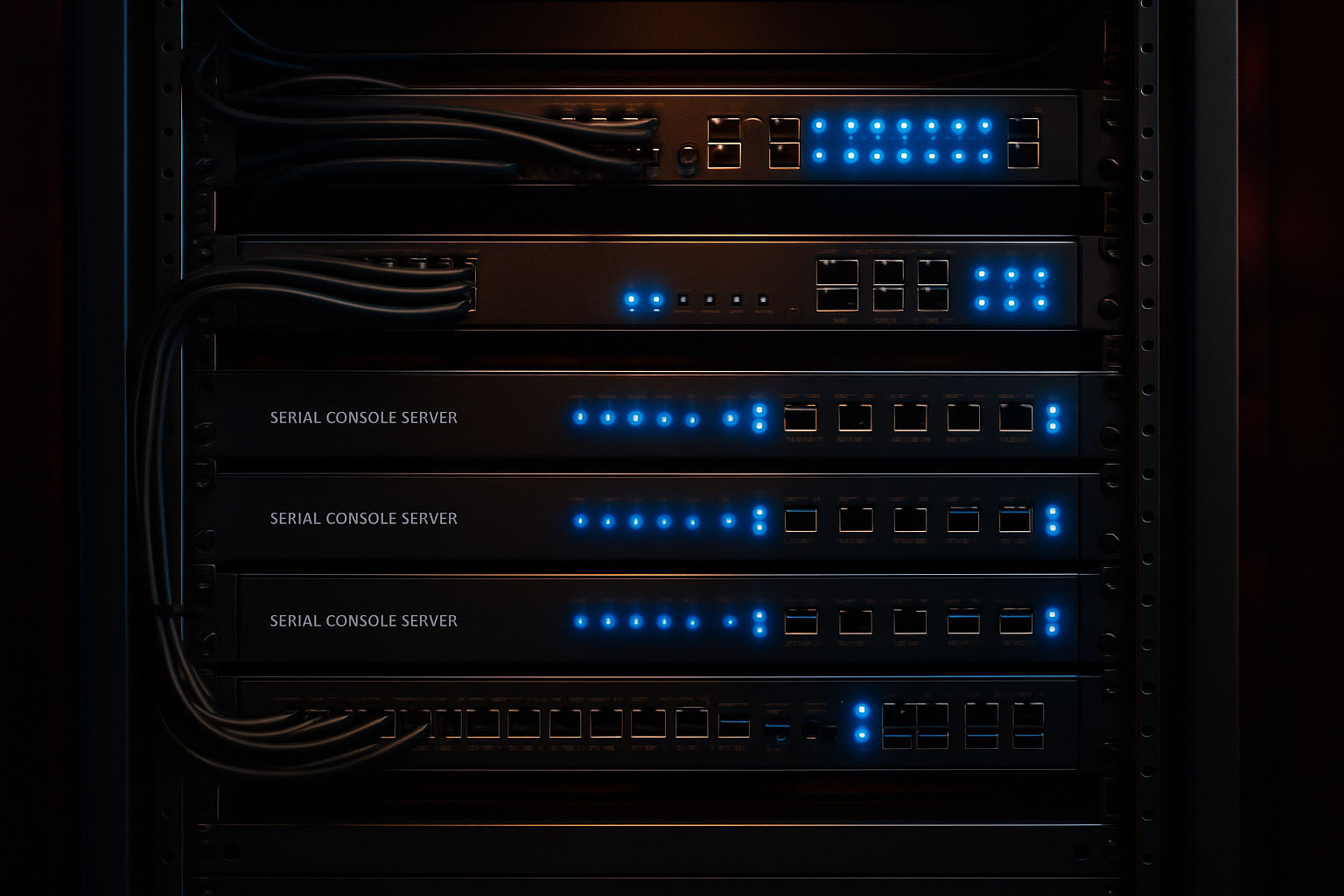
Lantronix EDS5000 units are serial console servers and environment monitoring devices commonly deployed in datacenters, server rooms, and network edge locations. They provide a management channel that sits outside the main network stack, allowing operators to access systems even when primary network infrastructure fails. This isolation is precisely why they matter, and why compromising them is so valuable to an attacker.
The attraction is straightforward: an out-of-band management device gives an adversary persistent access to critical infrastructure without needing to traverse firewalls or intrusion detection systems guarding the production network. Once inside, an attacker can reboot servers, modify BIOS settings, or inject commands directly into serial console sessions. For a hosting provider or datacenter operator running multiple customer systems, this represents a catastrophic escalation path.
The Code Injection Vector
Code injection flaws in management appliances are particularly dangerous because these devices typically operate in trust-heavy environments. Network administrators grant them broad connectivity permissions because they are assumed to be isolated from direct threat exposure. When a code injection flaw exists—allowing an attacker to execute arbitrary commands on the device itself—the assumption collapses.
The EDS5000 series has been in deployment for years across government, healthcare, and financial infrastructure. CISA's advisory notes active exploitation, which suggests either public proof-of-concept code has emerged or threat actors are already leveraging the flaw in targeted campaigns. Either way, sitting unpatched becomes an operational liability.
Why Patching These Devices Is Harder Than It Looks
Unlike patching a web server or endpoint, updating out-of-band management hardware often requires physical coordination or carefully scheduled downtime. Many operators are hesitant to reboot a console server managing dozens of customer systems because the change window must account for notification, testing, and customer communication.
The federal June 26 deadline assumes vendors have released patches. Smaller hosting providers and datacenter operators without FCEB contracts may not have the same urgency or vendor support. Lantronix typically provides security updates, but deployment adoption is often slow in production environments where reliability is measured by years of continuous operation.
Protecting Your Infrastructure Going Forward
For any operator managing EDS5000 or similar out-of-band devices, immediate action should include:
- Checking with your vendor for available patches and their compatibility with your current firmware version
- Segmenting out-of-band management networks behind authentication and access controls, even within your internal infrastructure
- Monitoring console device logs for signs of suspicious commands or connection patterns
- Documenting your current deployment and testing patch procedures in a non-production environment first
This incident reinforces a principle that operators tend to learn the hard way: infrastructure security is not just about the systems users touch. The unglamorous management layer—serial consoles, IPMI interfaces, power distribution units—is where attackers often settle after initial compromise. Treating these devices as trusted-by-default rather than hardened infrastructure is a common mistake.
If your hosting infrastructure depends on out-of-band management, treat CVE-2025-67038 as a signal to audit your entire management plane. Patch timelines, network segmentation, and access logging for these devices should receive the same rigour as your production systems. The cost of coordination now is far less than the cost of discovering an attacker already embedded in your console server.