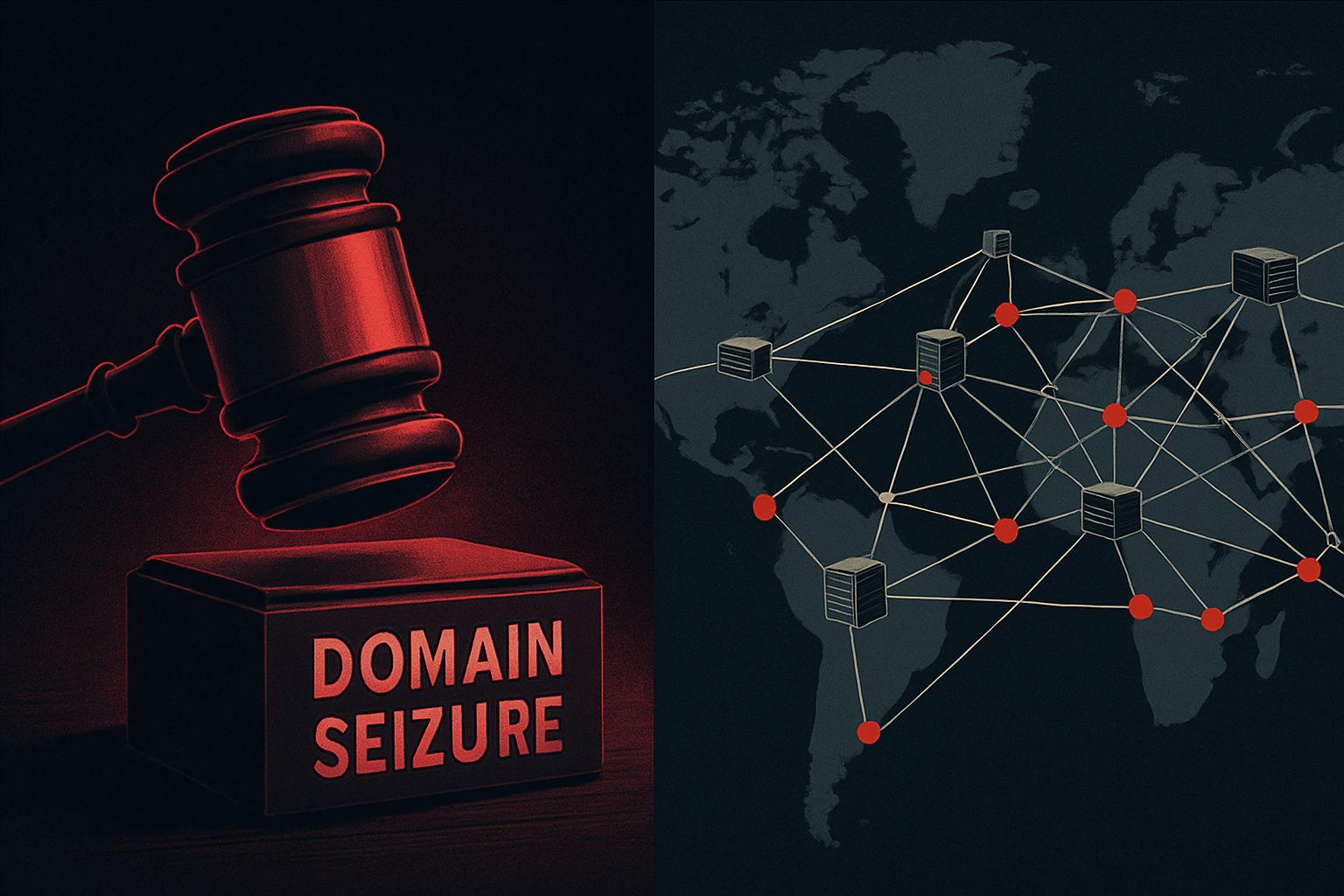
A Florida federal judge recently declined to transfer domains belonging to Aiyifan, a pirate streaming platform, despite awarding damages to the Chinese streaming service iQIYI. The reasoning behind that refusal offers a window into why domain seizures—a common enforcement tactic against copyright infringement—often prove ineffective at scale.
The Domain Seizure Bottleneck
Domain forfeiture is treated as a hammer in copyright enforcement. Authorities have used it to shut down sites ranging from Silk Road to various torrent aggregators. The logic is straightforward: control the domain, control the gateway to the infringing content. But the Aiyifan case illustrates a critical flaw in that assumption.
The judge's decision hinged on a practical observation: Aiyifan's domains do not host infringing content directly. Instead, they function as aggregation points—portals that link to or embed streams served from elsewhere. More importantly, those same domains may host content from multiple copyright holders, not just iQIYI. Seizing the domain would therefore harm other rightsholders whose content legitimately uses that infrastructure.
This creates a paradox. A domain is only valuable to a pirate operation if it remains accessible and associated with their brand. Yet the very openness that makes a domain useful for content distribution also makes it a poor target for legal seizure, because any single injunction typically covers only one rightsholder's claims.
Infrastructure Decentralisation Outpaces Enforcement
Modern pirate streaming platforms rarely depend on a single point of failure. Aiyifan, like many large-scale operations, likely employed a distributed architecture: domains for user-facing portals, separate hosting for metadata, and CDNs or peer-to-peer mechanisms for actual video delivery. Seizing one set of domains disrupts user discovery but not content delivery.
A committed operator can rotate domains rapidly—registering new ones across multiple jurisdictions, using registrars in countries with weak enforcement or privacy protections. They can also shift to decentralised alternatives: IPFS, blockchain-based naming systems, or mesh networks that don't rely on traditional domain infrastructure at all.
Takedown notices and domain seizures are reactive and linear. They target one domain, one registrar, one jurisdiction at a time. Pirate infrastructure, by contrast, is designed for resilience. The operator convicted in Shanghai—Wang Jianyang—may be serving time, but the technical problem of distributed content distribution persists.
Jurisdiction and Hosting Reality
The Aiyifan case also reflects a broader hosting truth: jurisdiction and enforcement are not aligned globally. A U.S. judge can issue an order, but enforcing it depends on cooperation from registrars, hosting providers, and governments in other countries. If a domain is registered offshore, or if nameservers are hosted in a jurisdiction that ignores U.S. court orders, the order becomes symbolic.
According to the reporting, iQIYI was awarded roughly 1% of its requested damages—a figure that hints at the practical limits of enforcement. The damages award doesn't recover lost revenue; it merely signals that infringement occurred. By the time a judgment is rendered, the operation has often shifted infrastructure entirely.
What This Means for Hosting Infrastructure
For infrastructure operators and hosting providers, this illustrates why takedown notices and seizure orders are blunt instruments. A hosting provider ordered to remove content faces liability, but only if the rightsholder can identify and prove infringement. A provider ordered to seize a domain faces a genuine legal puzzle: what if the domain hosts both infringing and non-infringing content from multiple rightsholders.
Providers in offshore jurisdictions with privacy-friendly policies—or DMCA-ignoring policies—face less pressure to comply at all. That asymmetry is not a flaw in the law; it is baked into the Internet's distributed nature. No single court order can compel a provider in a jurisdiction outside its reach, and forcing compliance requires diplomatic or trade pressure, which moves slowly.
The Aiyifan case demonstrates that criminal prosecution of individual operators can succeed, but shutting down the underlying infrastructure is far harder. A pirate streaming platform that distributes content across multiple providers, domains, and jurisdictions will survive the seizure of any single component. Until enforcement mechanisms match the speed and decentralisation of the infrastructure itself, takedowns will remain a cost of operations rather than a fatal blow.