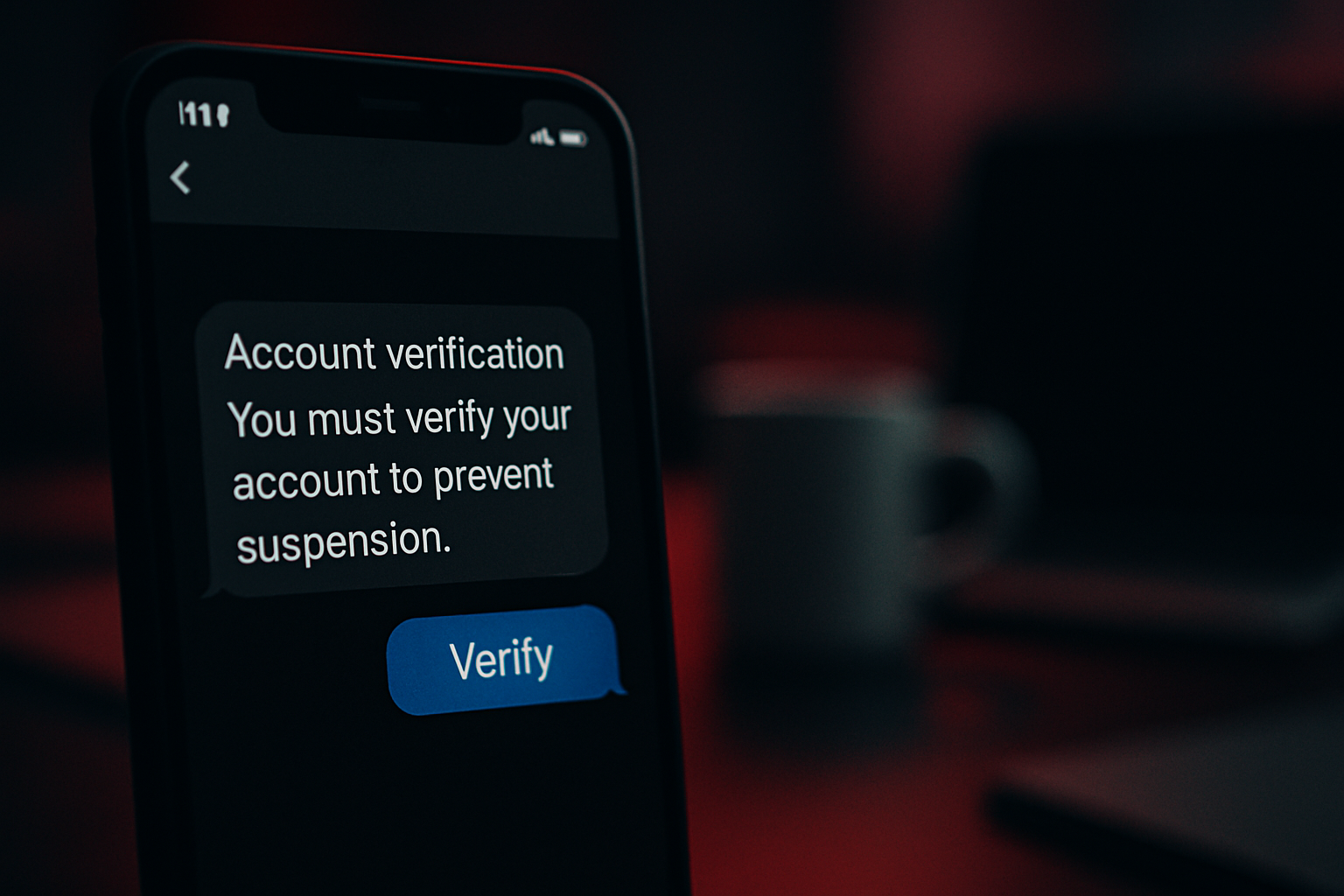
When attackers target high-value accounts, they rarely batter the front door. Instead, they impersonate the support team knocking politely with a fabricated problem. According to recent joint findings from Ukrainian and U.S. intelligence, this approach—sending fraudulent SMS messages claiming to come from messaging platforms—has proven devastatingly effective against government officials, military personnel, and activists across Ukraine, Europe, and North America.
The Social Engineering Foundation
The campaign relied on a straightforward but reliable premise: users trust their own communication platforms to send them security-related messages. When someone receives an SMS appearing to come from Signal, Telegram, or WhatsApp warning that their account is at risk, most respond reflexively. The attacker's message typically informs the target of suspicious login attempts or requests a re-verification of credentials—standard language that mirrors legitimate security alerts.
What makes this approach effective is that it exploits a genuine security practice. Two-factor authentication via SMS is ubiquitous, and users have been conditioned to treat SMS verification requests seriously. An attacker sending a message like "Verify your account now: [link]" or "Enter your code: [form]" activates the same threat-response pattern that legitimate platforms have trained users to follow. The target, already primed by years of platform security prompts, complies.
Technical Mechanics: From SMS Spoofing to Account Access
Sending a fraudulent SMS claiming to originate from a legitimate service requires either SMS spoofing capabilities or a lookalike number that closely resembles a known platform number. Once the target clicks the link or submits credentials on a phishing page, the attacker captures the username and password directly. If the account uses SMS-based two-factor authentication—which many do—the attacker may then trigger a real login attempt from their own infrastructure, prompting the platform to send a legitimate verification code to the target's phone. The user, now anxious about the "attack" they believe is underway, may voluntarily share that code with the attacker, believing it's part of the account recovery process.
This credential chain is particularly dangerous when the target uses the same username and password across multiple services—a practice far too common even among security-aware individuals. Once in a messaging account, the attacker gains access to private conversations, contact lists, and sometimes linked authentication tokens that grant access to email or other platforms.
Why This Works at Scale
Mass phishing campaigns rely on statistical inevitability: send 10,000 messages, and a percentage will click. But this operation appears to have been targeted and persistent, focusing on high-value individuals whose compromised accounts yield intelligence value. Government officials and military personnel are under time pressure and often handle multiple threat alerts daily. The cognitive overhead of distinguishing a convincing fake from a real security notification is significant, especially at 2 a.m. during a conflict.
The campaign's success also reflects a gap in platform-side protections. Most messaging applications allow account recovery via email or can reset credentials if SMS verification is completed. Few platforms implement rate limiting on login attempts or require out-of-band confirmation before resetting security settings. SMS itself remains a weak link—it can be intercepted, delayed, or spoofed more easily than push notifications or hardware security keys.
Defensive Implications
For individuals and organisations handling sensitive information, this campaign underscores the limitations of SMS-based security. Security keys (FIDO2) and authenticator apps (TOTP) are more resilient because they cannot be phished through a fake message—they require the physical device or app to generate a code for a specific domain. However, adoption remains slow in government and military contexts, often due to legacy system requirements.
Organisations should also implement email-based account recovery only after additional verification steps, monitor login patterns for geographic anomalies, and use browser-based security notifications rather than relying solely on SMS. Users should treat any out-of-the-blue security alert with healthy scepticism, especially if it arrives via SMS, and should independently verify alerts by visiting the official platform directly rather than clicking the link in the message.
The incident, documented by Ukrainian and U.S. authorities, demonstrates that no organisation is immune to credential compromise when attackers combine technical capability with patience and social understanding. The defence, as always, lies in reducing the window of opportunity through stronger authentication and sceptical verification practices.