When major tech consortiums like CCIA Europe—whose membership spans Amazon, Cloudflare, and Google—issue warnings about the side effects of copyright enforcement, infrastructure operators should pay attention. The concern isn't whether piracy is a problem; it's that the tools built to stop it are becoming indiscriminate blunt instruments that harm legitimate services and fragment the internet's fundamental architecture.
The Overblocking Problem
Content protection systems designed to block pirate streams of major sporting events operate at scale, and scale invites collateral damage. When a blocking mechanism targets an IP range, a domain registrar, or a DNS resolver associated with piracy infrastructure, it often catches innocent users and services sharing the same infrastructure. This is not theoretical; academic research backing CCIA Europe's position has documented cases where legitimate CDNs, DNS providers, and hosting services were inadvertently blocked because they shared infrastructure with flagged piracy nodes.
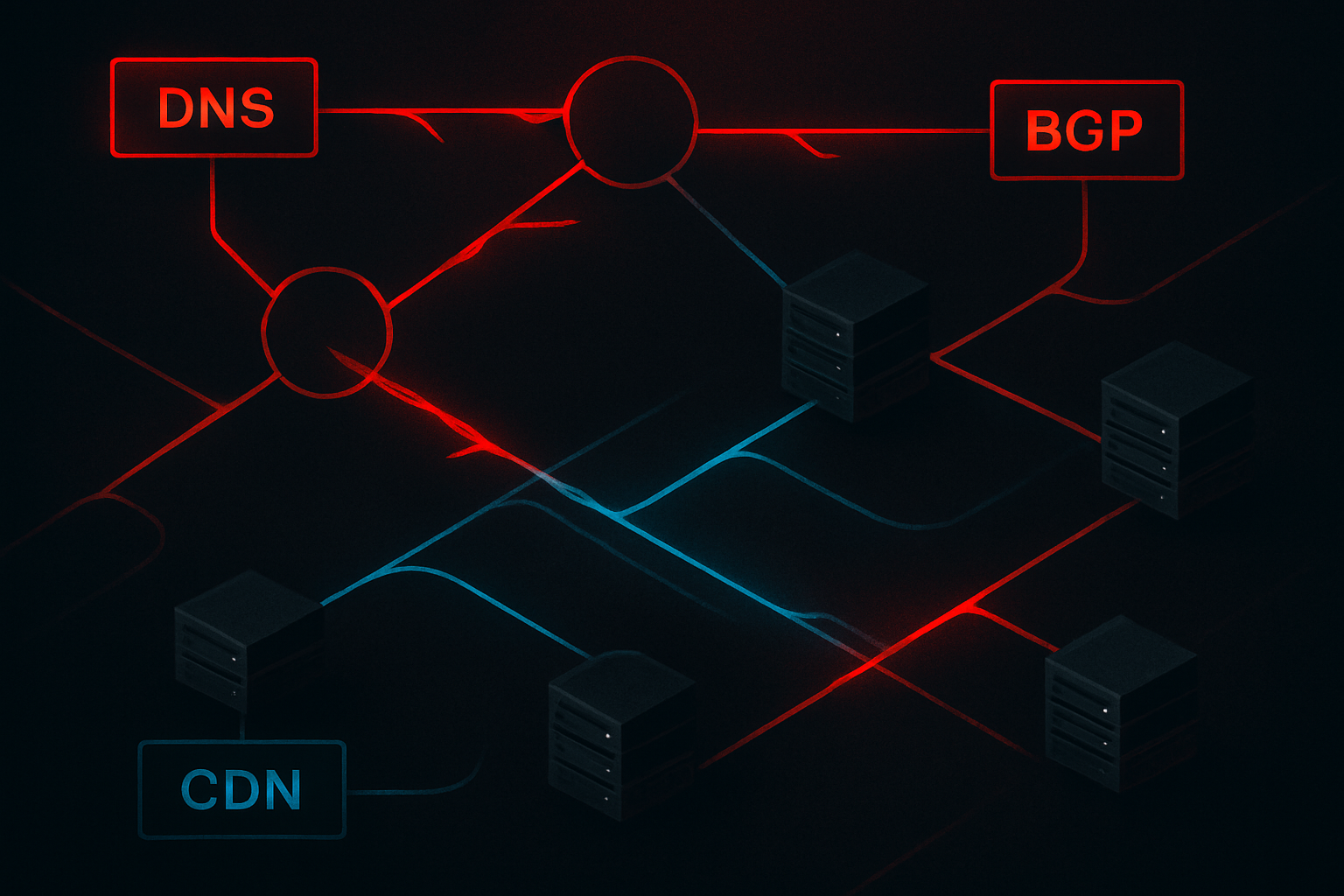
The mechanics are straightforward but destructive. ISPs or payment processors receive cease-and-desist notices and respond by blocking entire subnets, ASNs, or DNS providers rather than surgically targeting specific endpoints. A shared hosting provider might see legitimate customer sites become inaccessible not because they host illegal content, but because another tenant on the same server is flagged. DNS filtering—often the first line of anti-piracy defense—routinely over-blocks when rules are too broad or when legitimate domains share infrastructure with blacklisted ones.
Infrastructure Fragmentation as Policy Risk
From an operator's perspective, this creates operational friction that accumulates across the entire stack. Hosting providers, CDNs, and DNS operators must now maintain separate compliance teams to handle takedown notices that target not just the infringing content, but the IP space, domain registrations, and routing announcements associated with it. Each overblocking incident requires investigation, appeals, and remediation—work that raises operational costs and slows service recovery for legitimate users.
Beyond cost, there's a technical concern: overly aggressive blocking encourages jurisdictional arbitrage and infrastructure fragmentation. When blocking becomes too broad or unpredictable in one jurisdiction, operators migrate to alternative infrastructure, sometimes to regions with less developed compliance frameworks. This doesn't eliminate piracy; it disperses it, making enforcement less targeted and pushing infrastructure into less transparent environments. The end result is not a safer internet, but a more fragmented and less resilient one.
The Targeting Problem
Legal enforcement against copyright infringement was designed around discrete violations: specific websites, specific uploads. But modern anti-piracy systems operate at the infrastructure layer—DNS, BGP routing, payment processing—where targeting a single bad actor often requires blocking entire swaths of innocent infrastructure. According to reports from CCIA Europe and supporting research, the scale of overblocking can be measured in thousands of collateral-damaged services and millions of affected users.
The political economy of this is worth noting: rightsholders have strong incentives to cast a wide net (maximizing disruption to piracy), while the infrastructure operators bearing the cost have weak incentives to fight back (compliance is cheaper than litigation). Users—those harmed by overblocking—have no seat at the table. The result is a bias toward aggressive, broad-spectrum blocking rather than precise, narrowly-targeted enforcement.
What's at Stake
For hosting operators, VPS providers, and datacenter managers, this matters concretely. Overblocking incidents create support burdens, reputation risk, and unpredictable compliance costs. When a legitimate customer's service goes dark because payment processing was blocked due to collateral damage, that's a customer service failure no amount of fine print can excuse.
There's also a deeper principle: the infrastructure layer should remain neutral and transparent. When blocking decisions are made by ISPs, DNS providers, or payment networks based on content policy, the line between enforcement and censorship blurs. Jurisdictions with poor rule of law or weak due process protections can weaponise the same infrastructure tools, knowing that overblocking can be written off as collateral damage.
The solution isn't to abandon copyright enforcement. It's to insist that enforcement mechanisms be precise, transparent, and subject to due process. Blocking should target the specific infringing service, not the entire infrastructure layer. Collateral damage should be audited and minimised, not tolerated as an acceptable cost of doing business. Until that standard becomes enforceable, overblocking will remain a persistent tax on the open internet, and infrastructure operators will bear most of the cost.