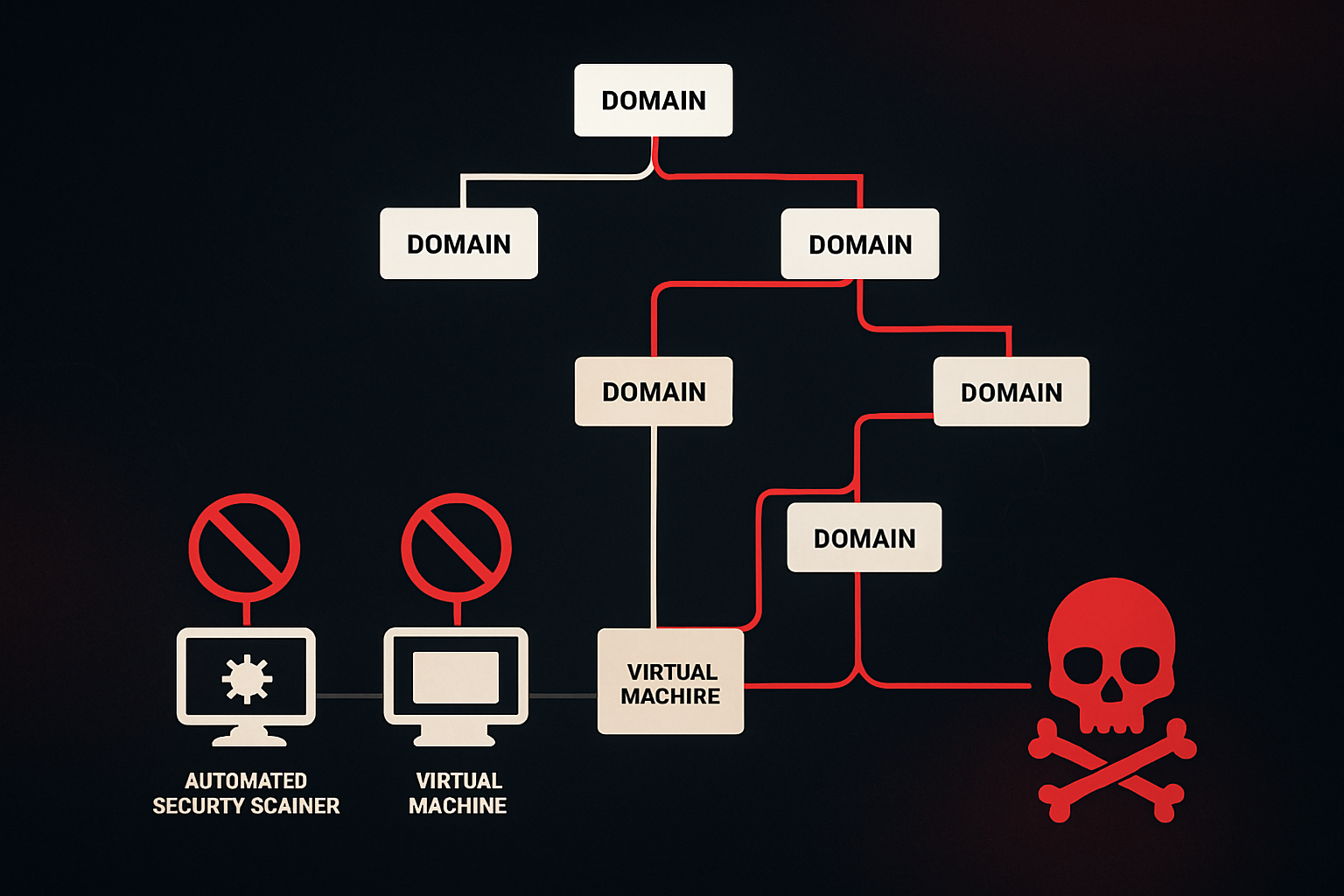
The ClickFix campaign has long been a reliable vector for macOS malware distribution, but recent refinements to its infrastructure reveal a meaningful shift in adversary sophistication. Rather than serving identical payloads to all visitors, operators now inspect browser characteristics and request patterns before deciding whether to display a malicious page. This server-side gatekeeping fundamentally changes how security teams must approach detection and analysis.
How Browser Fingerprinting Gates Malicious Content
Browser fingerprinting collects identifying signals without relying on cookies or storage: HTTP headers, user agent strings, JavaScript capabilities, screen resolution, installed fonts, and WebGL vendor information. Aggregated, these signals create a profile unique enough to distinguish human browsers from automated tools.
In the ClickFix case, over 250 front-end domains now implement this gatekeeping logic. When a visitor lands on an infected page, server-side code evaluates their fingerprint. Automated crawlers, sandboxes, and security researchers see benign content. Genuine macOS users browsing from typical configurations receive the fake software download prompt.
This is not a novel technique in isolation—advertising networks and anti-bot services have used fingerprinting for years. What marks a shift here is its adoption in commodity malware distribution. The operational overhead of fingerprinting at scale suggests either consolidation around a shared malware-as-a-service backend or significant investment by a single threat actor.
Detection Becomes a Reverse-Engineering Problem
Traditional honeypot and sandboxing approaches lose effectiveness when infrastructure discriminates based on execution context. A researcher spinning up a macOS virtual machine in a lab environment will likely trigger fingerprinting logic that flags the setup as synthetic. The malware page remains invisible.
This forces defenders into a slower, more manual cycle: obtaining samples through other means (captured endpoints, user reports, memory dumps), reverse-engineering the fingerprinting logic, then identifying what browser profiles the operators accept. Threat intelligence takes longer to acquire and distribution campaigns run longer before attribution.
For security teams operating infrastructure-level defenses—CDN providers, ISP-level filtering, enterprise gateways—the implication is that blocking based on domain reputation alone becomes insufficient. Blocking must occur upstream, at the DNS or network level, before the HTTP request ever reaches the fingerprinting gate. Passive DNS and passive HTTP data become more valuable intelligence than active scanning.
Implications for Shared Hosting and VPS Security
Shared hosting and VPS environments face a distinct risk. If a compromised account on shared infrastructure houses malware distribution code, the attacker gains access to legitimate SSL certificates, established IP reputation, and shared nameserver infrastructure. A shared cPanel host with hundreds of legitimate domains provides excellent cover for hidden malware gates buried among ordinary traffic.
Providers must implement robust scanning for suspicious scripting patterns—particularly server-side logic that makes conditional decisions about content delivery based on request characteristics. Monitoring for unusual outbound connections from web root directories, analysis of PHP or Node.js code for fingerprinting libraries, and alerting on infrastructure anomalies become essential controls.
The scaling of ClickFix across 250+ domains also reflects another infrastructure reality: attackers are rotating through disposable domains faster than reputation databases can flag them. Domain registration, DNS configuration, and certificate issuance now form a critical part of the threat actor's operational tempo. Each domain might live for days or weeks before being blacklisted, then the process repeats.
The Broader Pattern in Evasion Evolution
Browser fingerprinting as a malware gate exemplifies how adversaries systematically adopt defensive techniques once they mature in other industries. The advertising technology ecosystem has been solving the automated-traffic problem for over a decade. As that knowledge becomes commoditised and accessible, it migrates into criminal infrastructure.
This suggests future variants will incorporate additional evasion layers: geolocation checks, network reputation queries, historical request pattern analysis. Each layer increases the operational cost of detection but remains profitable as long as the malware distribution pipeline generates sufficient revenue.
For operators of infrastructure—whether hosting providers, CDN services, or corporate security teams—the takeaway is that reputation systems alone will not contain this threat. Active threat hunting, behavioral analysis of hosted content, and cooperation with law enforcement to disrupt the domain-registration supply chain remain necessary. Fingerprinting is a symptom of a more determined, resource-rich adversary; the underlying campaign requires strategy beyond reactive blocking.